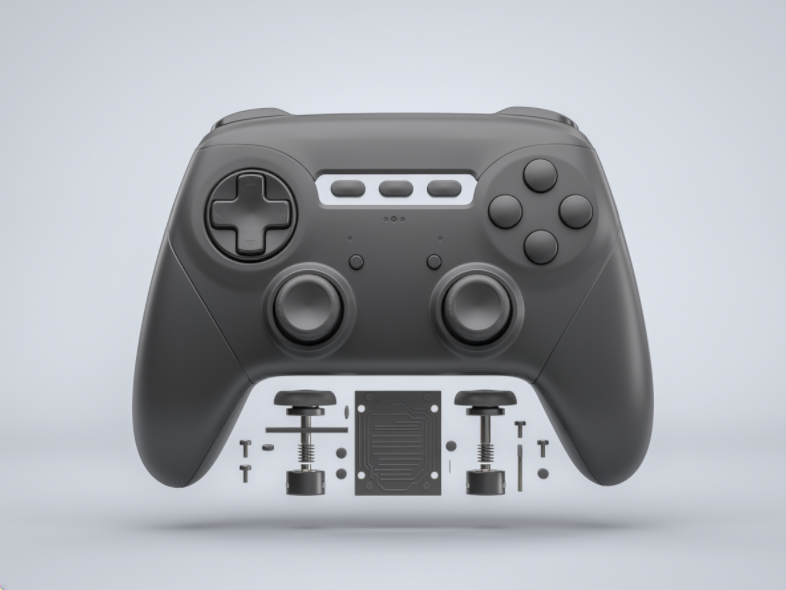
Moving from a refined CAD model to a physical product is one of the most important transitions in hardware development. At this stage, design intent begins to meet material behavior, tooling constraints, assembly logic, tolerance control, and production reality.
For complex hardware programs, early design decisions can affect much more than appearance. Wall thickness, draft angle, parting line, internal ribs, snap-fit structure, screw bosses, gasket paths, antenna clearance, and assembly sequence all influence whether a product can be tooled, validated, and produced consistently.
This is why Design for Manufacturing should not be treated as a late-stage checklist. It should be part of the product architecture review before tooling decisions are locked.
From Design Intent to Manufacturing Reality
Industrial design often begins with user experience, form language, ergonomics, and brand expression. Manufacturing preparation begins with a different set of questions: how the part is molded, how the material flows, how the enclosure releases from tooling, how parts align, and how the product can be assembled repeatedly.
The strongest hardware programs connect these two views early. Product design and manufacturing preparation should not compete with each other. They should be reviewed together so that the final product can preserve design intent while meeting engineering and production requirements.
BaysonTech supports selected hardware programs by reviewing DFM requirements alongside industrial design, mechanical structure, material selection, tooling input, validation planning, and production-readiness preparation.
Common DFM Risks in Complex Hardware
Many DFM risks are easier to address before tooling begins. Once a mold has been cut, even small design changes can become slower, more expensive, and more disruptive to the project schedule.
Draft angle is one example. If vertical walls are designed without sufficient draft, the part may become difficult to release from the mold. This can create surface defects, dimensional variation, or tooling adjustment requirements.
Wall thickness is another common concern. Inconsistent wall thickness can affect cooling behavior, shrinkage, sink marks, warpage, and structural stability. These risks are especially important in compact enclosures where internal space is limited.
Undercuts also need early review. Some undercuts are necessary for functional snaps, buttons, covers, or locking structures. But if they are not planned carefully, they may increase tooling complexity or require additional mold actions.
Early DFM review helps the team decide where to preserve the original design, where to adjust geometry, and where to simplify structure without weakening the product experience.
Material, Tooling, and Assembly Decisions
DFM is not only about the plastic part. It also connects material selection, surface finish, coating requirements, tolerance strategy, fastener choice, gasket design, PCB position, connector access, and assembly process.
A material that looks right in a render may behave differently during molding, finishing, bonding, or long-term use. A surface detail that looks simple in CAD may create tooling risk or inspection difficulty. A snap-fit that works in one prototype may need adjustment before repeatable assembly.
For this reason, BaysonTech reviews manufacturing assumptions together with product direction, mechanical design, electronics layout, and production requirements. The goal is to reduce avoidable risk before the program moves deeper into tooling and validation.
Validating Before Tooling Commitment
Before committing to production tooling, selected programs may require prototype validation, fit checks, tolerance review, assembly testing, and material or surface-finish evaluation.
EVT-stage work can help the team understand whether ergonomic feel, part alignment, enclosure fit, button travel, snap force, gasket compression, and assembly sequence are moving in the right direction.
Prototype validation does not eliminate every production risk. But it helps identify structural, mechanical, and manufacturing concerns earlier, when changes are still easier to make.
DFM as a Production-Readiness Discipline
A product is not production-ready simply because the design looks complete. Production readiness requires a clearer view of tooling assumptions, part geometry, assembly flow, inspection requirements, BOM status, supplier inputs, and quality-control expectations.
DFM creates the bridge between the product the team wants to build and the product that can be manufactured consistently. It helps convert design intent into practical engineering decisions.
For BaysonTech, early DFM is part of responsible hardware development. It keeps product ownership, engineering reality, tooling preparation, and manufacturing execution aligned before the project reaches critical production stages.
Key Takeaway
Early DFM helps hardware teams identify structural, material, tooling, and assembly risks before they become harder to correct. It is not a final approval step. It is an engineering discipline that should begin while the product architecture is still flexible.